Manor, TX summers have a way of taking your patience out for a drive. One day you are fine, the next day the humidity hits, the air feels heavy, and your AC starts running longer than it should. When that happens, it usually is not a single dramatic failure. It is a bunch of small problems stacking up: a system that is a little low on airflow, a thermostat that is set a little too aggressively, a drain line that is a little slow, or a dirty filter that is quietly strangling performance.
The good news is you can prevent a surprising number of these issues with smart AC maintenance in Manor TX and careful habits for safe startup and shut down. If you combine those routines with the right HVAC contractor when something is off, you protect comfort and you protect your equipment.
This is also where ATX Heating & Air Conditioning LLC earns its keep. Not by guessing, but by checking. Pressure, airflow, temperature splits, condensate drainage, electrical connections, and the things most homeowners never see until the system is already struggling.
Why safe startup matters more than people think
A lot of people think “startup” is just turning the thermostat from off to cool and letting the system do its job. In reality, startup is a short window where the system has to establish stable conditions fast. If something is wrong, the consequences show up quickly: the compressor might short-cycle, the indoor coil might ice up later, or you might hear buzzing or unusual cycling that you never noticed before.
In a hot, humid place like Manor, TX, the AC is working against real-world load. If the indoor airflow is weak, the evaporator coil temperature drops too far and the coil can freeze. If airflow is restricted, refrigerant behavior changes, and the compressor ends up working harder than it should. None of that is instant. But the early signs often appear at startup: higher-than-normal blower noise, the fan running a long time without much cooling, or the system kicking on and off in quick intervals.
Safe startup habits give you early warning. They also reduce strain on components that do not love repeated stress.
The “first 10 minutes” routine that prevents a lot of problems
When you start your AC for the first time in a while, especially after spring or a long stretch of mild weather, don’t just blast it and walk away. A little attention goes a long way.
Set the thermostat to your normal comfort range, not an aggressive drop. If you keep lowering it by 10 degrees every hour, the system may respond by running longer than necessary, increasing humidity indoors even though it feels “cold enough.” Better approach is steady comfort. The exact setting is personal, but the principle is consistent: avoid big swings that force the compressor to recover from extremes.
Then watch what happens for the first several minutes. You are not trying to diagnose; you are observing. Is the air coming from the vents actually cold? Do you hear steady operation, or are there pauses and rapid restarts? Does the blower sound like it is moving air normally, or does it sound choked, rattly, or louder than usual?
If you notice any of those early warning behaviors, it is often better to pause and address them than to “power through” and hope it clears up.
A quick startup check you can do safely
You are not opening panels or messing with refrigerant. Just use what you can see and feel.
- Set the thermostat to cool and wait for the indoor blower to start, then confirm air is blowing strongly from multiple vents. Feel the air temperature at the vents after a few minutes; it should feel noticeably cooler than room temperature. Listen for unusual cycling, buzzing, or squealing from the indoor unit, outdoor unit, or both. Check that the outdoor unit has clear airflow and nothing blocking the sides or top. Look at the indoor drain area during operation, if accessible, for signs of backing up or standing water.
That five-item routine is simple, but it prevents the common mistake of assuming the system is fine because it turns on.
Filter habits that protect airflow and keep coils happy
The filter is the easiest part of AC maintenance in Manor TX, and it also gets ignored the most. Dirty filters reduce airflow, and reduced airflow is one of the fastest ways to trigger performance problems. When the coil cannot get proper airflow, it can get too cold. When it gets too cold, it can freeze. When it freezes, you lose cooling, the system works longer, and the indoor humidity control suffers.
A clean filter helps almost every scenario. It also makes your system easier to diagnose. If an HVAC contractor in Manor TX comes out and checks airflow and refrigeration performance, a filter that is clogged will distort the picture. You might end up paying for more troubleshooting because the system was artificially underperforming.
For best results, check the filter at least every few weeks during heavy use season. If you have pets, heavier dust, or you run the system constantly, you might need to check more often. The filter itself should fit properly in the rack. A filter that is the wrong size or installed backwards will still restrict airflow, even if it looks clean.
Thermostat settings that reduce strain, especially in humidity
People love to set the thermostat to the lowest number possible, then argue with it when the house does not cool instantly. The truth is that an AC system is limited by its capacity. The compressor cannot create infinite cooling, and the indoor coil cannot remove humidity faster than it is designed to.
In Manor’s heat and humidity, the goal is often not just temperature, but stable humidity control. When you force aggressive cooling, the system can run in a way that cools air but does not dehumidify consistently. Over time that can make the home feel sticky, even if the thermometer reads “cool.”
A practical approach is to keep a reasonable setpoint and let the system cycle normally. If your house is not reaching the target after normal adjustment time, that points to a real performance issue rather than a thermostat behavior issue. That is the moment to consider HVAC repair in Manor TX instead of continuing to lower the setpoint.
If you have a programmable or smart thermostat, don’t set schedules that create huge indoor swings. The system will pay the price when it has to recover quickly.
Safe shutdown: stopping at the right time
Shutdown seems harmless. Turn it off, walk away. But safe shutdown is about protecting the system from unnecessary moisture problems and reducing wear on electrical components.
When the AC is running during humid conditions, the indoor coil is dehumidifying air. That means water is being pulled out and drained away through the condensate line. If shutdown happens in the middle of a heavy run, there is a risk that moisture lingers inside the coil and drain path. That can lead to musty odors and, in some cases, microbial growth in the drain and air handler environment.
Many homeowners miss the opportunity to use the fan to “dry out” the system.
One safe shutdown strategy that helps with moisture
If you are home and can control the thermostat at the end of your cooling period, set the fan mode to run briefly after cooling stops, when your system allows it. The exact timing depends on conditions, but the idea is to run the indoor blower long enough to move air across the coil and reduce lingering moisture.
If your thermostat has a “fan only” option, use it. If it only allows auto fan behavior, follow the system’s normal cycle and focus on overall maintenance. Either way, the goal is a cleaner, drier airflow path after the AC stops.
Be careful not to do anything that conflicts with the equipment’s design. If you are unsure how your thermostat or air handler behaves, it is worth asking your HVAC contractor. That question is cheaper than guessing.
Common startup and shutdown problems in Manor, TX
Some AC issues are seasonal. Others show up after the first real hot stretch.
Here is what I see often when homeowners call for AC Repair in Manor TX, after years of “it worked yesterday” stories that google.com start with shutdown habits or startup impatience.
First, short cycling. The system turns on, runs briefly, then turns off, then turns on again quickly. This can be caused by airflow problems, thermostat problems, refrigerant or restriction issues, or sensor problems. You might also notice it more on hot days when the load rises fast. Short cycling often feels like the unit is “working,” but it is not staying in the range where it can dehumidify properly.
Second, slow cooling after startup. The unit runs, but the air feels lukewarm. In humid conditions, this can be frustrating because temperature drops slowly even as the system runs longer. Dirty coils, airflow restrictions, and refrigerant-related issues can create that symptom. It is not something you should ignore for weeks.
Third, drain trouble after humidity heavy runs. Sometimes shutdown is where the issue reveals itself. You might smell a damp odor, notice water where you normally do not, or see the pan level rising. If the condensate drain is restricted by algae, dirt, or a clogged line, the system can back up, causing water intrusion risk. That is exactly the kind of issue that safe shutdown and routine inspections can reduce, but it still may require professional clearing.
When to call for HVAC repair instead of “tweaking”
Homeowners often try to troubleshoot by adjusting thermostat settings, swapping filters, or turning the system on and off repeatedly. Those actions are not always helpful. Some problems are operational and require measurement.
A smart rule is to call for HVAC repair in Manor TX when you see symptoms that persist after basic steps like installing a fresh filter and confirming vents are unobstructed.
If you are unsure whether you should wait or call, use these signs as a practical guide.
- The system short-cycles repeatedly (turning on and off in quick succession) after fresh filter installation. Cooling is weak or inconsistent even though airflow feels normal. There are new noises during startup or shutdown that did not exist earlier. You notice water accumulation, gurgling, or damp odors linked to the indoor unit operation.
If any of those show up, it usually makes sense to bring in a pro. The earlier you catch the issue, the more likely it is to be a fix that is straightforward rather than a chain reaction.
Maintenance that pays off even when nothing is “broken”
AC maintenance in Manor TX is not just about preventing total failure. It is about keeping performance steady and predictable. When a system runs within its design range, it typically costs less to operate and lasts longer.
There are two types of maintenance: what you do as the homeowner, and what needs a technician.
Homeowner maintenance is mostly airflow, cleanliness, and monitoring. You handle the filter, keep the outdoor unit clear of debris, and keep air vents open. You also pay attention to changes in sound, airflow strength, and how quickly the home cools.
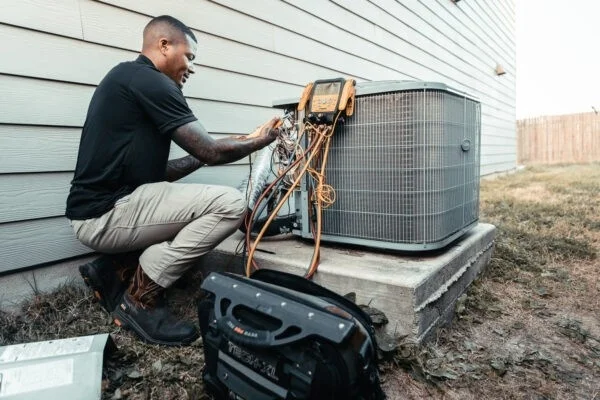
Technician maintenance usually includes checking electrical connections, verifying operational temperatures and airflow, inspecting the indoor coil condition, checking refrigerant-related performance indicators, verifying drain function, and looking for wear that can lead to later problems. A good HVAC contractor in Manor TX will explain what they find in plain language, not just hand you a bill and a vague report.
ATX Heating & Air Conditioning LLC is the kind of company you call when you want that balance: respectful communication, measured diagnostics, and real recommendations tied to what is actually happening in your equipment.
“Do I need AC installation now?” is really a performance question
Sometimes people assume that if the AC is acting up, the answer must be a replacement. Sometimes it is. Often it is not.
When you are considering AC installation in Manor TX, the deciding factors are usually performance, reliability, and cost to keep it running. A unit that is failing repeatedly, struggling to cool, or requiring frequent repairs becomes a budgeting headache. If the system is still cooling adequately and the issues are isolated, a repair can be the smarter move.
The tricky part is that older systems can start showing problems that feel expensive but might still be repairable. Meanwhile newer systems with poor installation, restricted airflow, or mismatched components can also struggle. That is why diagnosis matters.
If you are on the fence, ask for a clear explanation tied to your system’s actual operation: airflow measurements, temperature behavior, and whether the drain and electrical components are functioning as they should. You want recommendations that make sense, not pressure.
A few judgment calls you should not ignore
Safe startup and shut down tips are helpful, but you still need good judgment. Here are the trade-offs I usually talk through with homeowners.
If you shut the system off to “reset” it and it keeps behaving oddly, that is not a reset problem, it is an operational problem. Turning it back on might temporarily restore function, but it can also worsen an issue like freezing or drainage backup.
If you run the AC continuously to maintain comfort, you might reduce temperature swings, but continuous run can be harder on humidity control depending on system condition. Sometimes the solution is not “run it more,” but “make it run correctly” with clean airflow and verified performance.
If you cover the outdoor unit during part of the year, be careful. Improper covers can trap moisture and debris. When the unit finally needs to start, trapped debris and restricted airflow can contribute to startup problems. Outdoor unit airflow should be treated as critical, especially right before heavy season begins.
Practical startup and shutdown habits you can commit to
A few habits are simple enough to stick with, and they reduce wear in the real world.
Before the first hot stretch, check the filter, clear nearby debris around the outdoor unit, and confirm vents aren’t blocked. At the start of the day or when you turn the thermostat down, avoid extreme temperature jumps. During peak humidity, aim for steady comfort so the system can cycle in a normal rhythm and manage moisture properly.
When you stop cooling for the day or for the season, use the fan drying approach when possible and avoid abrupt shutdown mid-cycle if your thermostat allows a controlled stop. Keep an eye on odors or drain behavior after changes in routine. If anything shifts, don’t let it slide because “it works for now.” HVAC problems often start with small symptoms that grow quietly.
And if you ever suspect the issue is bigger than basic maintenance, get a technician diagnosis. AC Repair in Manor TX is not about waiting for the worst-case scenario. It is about catching problems while they are still manageable.
If you want the system to behave, make startup and shutdown part of your routine
The comfort you feel in your home is the result of thousands of micro-decisions your AC makes every day. Most of those decisions depend on airflow, moisture management, electrical stability, and consistent operating conditions.
Safe startup and shut down habits are your leverage. They reduce stress, reveal early warnings, and help prevent the most common performance breakdowns that show up first in the start and end of daily run times.
When something still feels off, reach for real help. A reliable HVAC contractor in Manor TX will treat your system like equipment that needs measured performance, not a guessing game. For ongoing care and troubleshooting, ATX Heating & Air Conditioning LLC is a solid choice when you want the work done thoughtfully and the explanations to match what they actually find.
If you are ready to make this season easier, start with the simplest change. Fresh filter, clear airflow, reasonable thermostat settings, and a quick check in the first few minutes of operation. Your AC will notice, and so will your electric bill and your comfort.
ATX Heating & Air Conditioning
13809 Theodore Roosevelt St., Manor, TX - 78653
(737) 406-8083
[email protected]
Website: https://atxheatingandac.com/